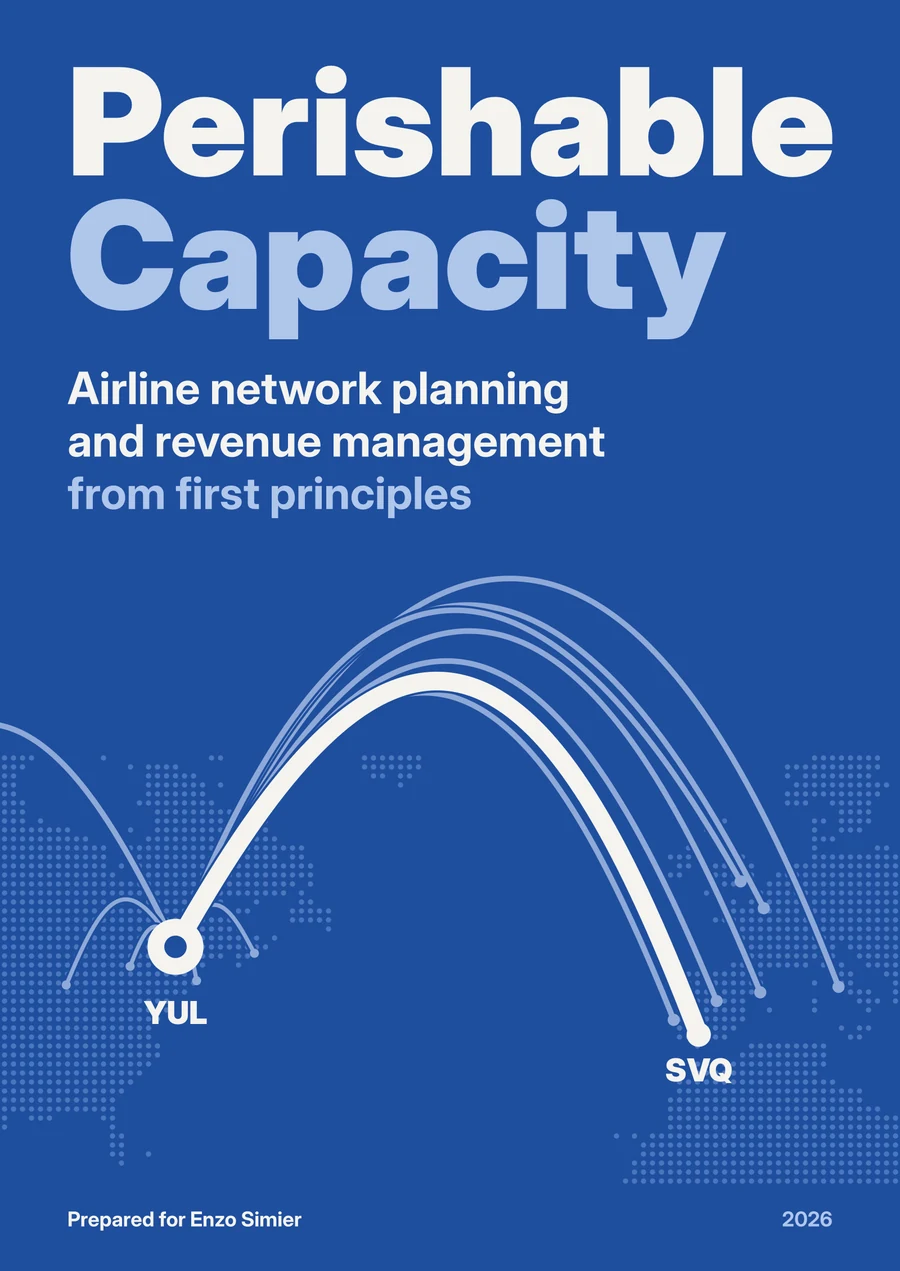
A study book · October 2026
PerishableCapacity
Airline network planning and revenue management from first principles
How an airline decides where to fly, how often, with which aircraft and at what price. Each mechanism is shown in a figure and worked in numbers on one case: a new route from Montreal to Seville.
- chapters
- 17
- appendices
- 3
- figures
- 86
- worked examples
- 81
- pages
- 397
Full reference edition, 24 chapters with every derivation: PDF (778 pages, 4.4 MB) · EPUB (9.6 MB)
Contents
Five parts, from the planning chain to the practice of 2026.
Part I
The Airline as a System
- 1The Planning ProblemThe chain of decisions from fleet to the day of operation, and where the network analyst sits in it.
- 2Measuring an AirlineLegs, itineraries and tickets; ASK, yield, unit revenue and unit cost; Air Canada's Q2 2026 results read line by line.
- 3Costs and ProductivityWhy unit cost falls with distance and size, and which costs a route decision should count.
Part II
Demand
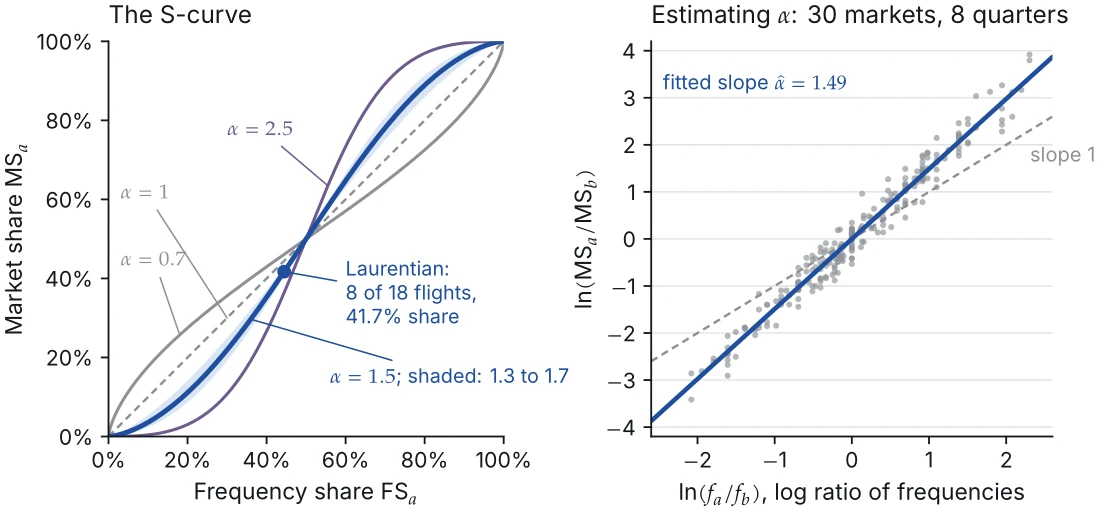
- 4Air Travel DemandElasticities, schedule delay, the S-curve and the traffic a new nonstop creates.
- 5How Passengers ChooseWhat travellers trade off between itineraries, why nonstops and connections compete unevenly, and why fares read from airline data mislead.
- 6Forecasting DemandForecast levels, honest evaluation, booking curves and how to size a route that has never flown.
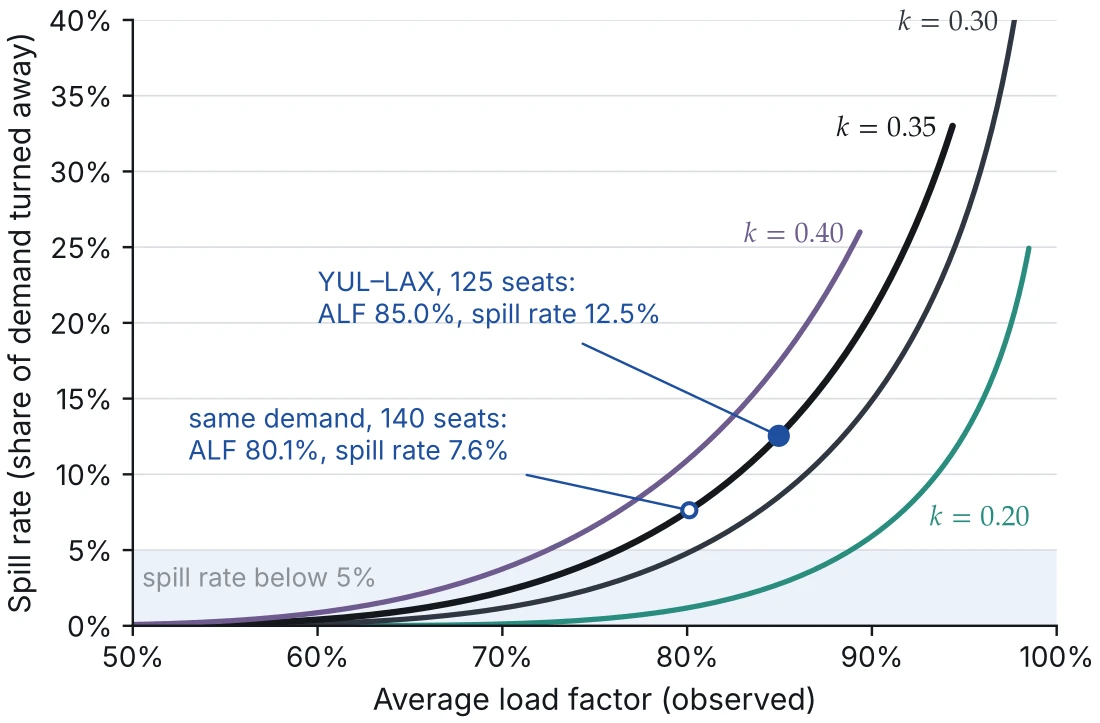
- 7Spill and RecaptureWhat happens when demand exceeds the seats: the spill formula, recapture and the value of one more seat.
Part III
Designing the Network
- 8Network Structure and ConnectivityHubs and banks, connecting traffic, alliances and joint ventures, freedoms of the air and Canadian competition.
- 9Fleet PlanningPayload-range, the A321XLR to Seville, owning versus leasing and a fleet decision.
- 10Route EvaluationThree views of route profit, prorate, feed and displacement, and the Montreal–Seville case season by season.
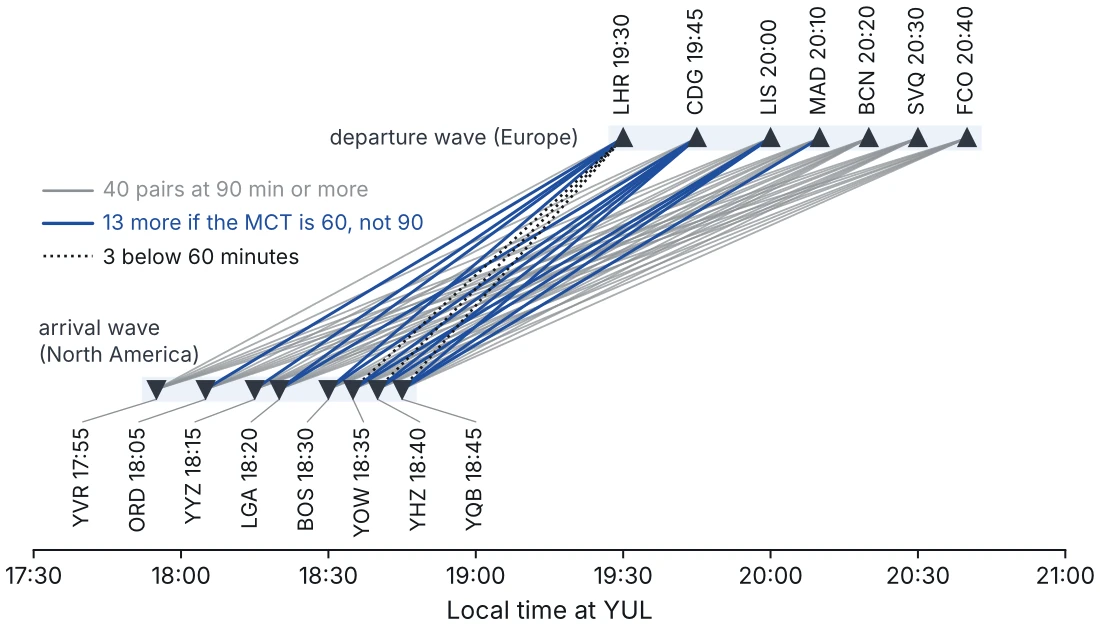
- 11Frequency and Schedule DesignFrequency against gauge, hub banks and connections, rotations, time zones and slots.
- 12From Schedule to Aircraft and CrewsWhat fleet assignment, maintenance routing and crew pairing do with the timetable, and what breaks when a flight moves.
- 13Robustness and Operations RecoveryHow delays propagate, what buffers buy, and what disruption costs.
Part IV
Revenue
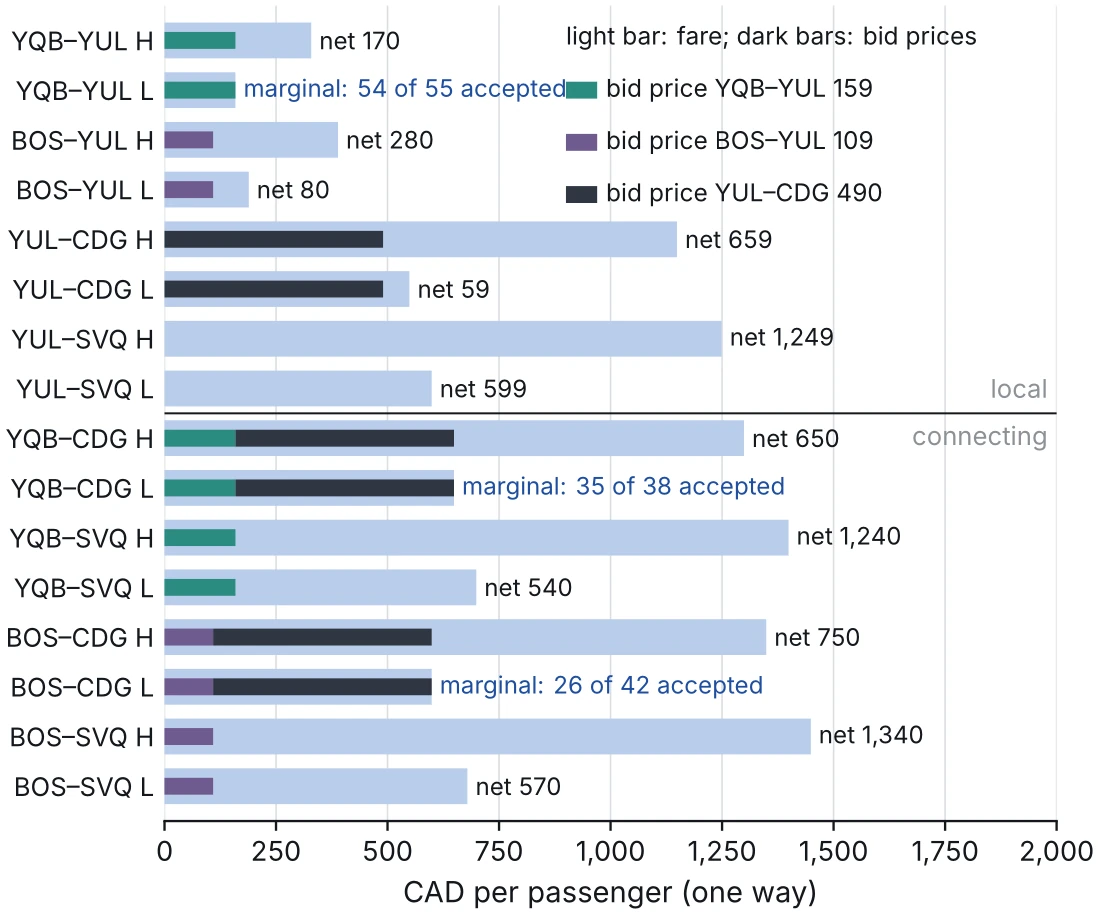
- 14Revenue Management for PlannersFare structures, protection levels, overbooking and bid prices, as the network planner needs them.
- 15Where Planning Meets Revenue ManagementBid prices as the value of capacity, valuing an upgauge, and the questions to ask the revenue management team.
Part V
Practice
- 16The Industry in 2026Supply constraints, carbon rules, continuous pricing and the Canadian market.
- 17The Analyst's ToolkitData sources and their traps, a reproducible workflow, audit checks and the decision memo.
Appendices
Reference
From the book
Every figure is drawn from the numbers in the text.
How it was made
Sources
The book was written from a reading library: MIT OpenCourseWare's Airline Management (16.75J, 2006) and Airline Schedule Planning (1.206J, 2003), chapters of Kenneth Train's Discrete Choice Methods with Simulation, a network planning preparation handbook, Air Canada's second-quarter 2026 MD&A, the Competition Bureau's 2025 airline market study, IATA's Worldwide Airport Slot Guidelines, EUROCONTROL's think paper on punctuality and Airbus's A321 planning manual. Facts about 2026 come from public sources, each cited where it is used.
Every number in the text is recomputed by a script, and every chapter went through an independent technical review of its derivations, numbers and sources. This Network Planning edition was cut from the full reference edition, keeping the mechanisms and the worked cases and moving the derivations to an appendix. The book was drafted and typeset with Claude (Anthropic): the PDF in XeLaTeX with TeX Gyre Pagella and Inter, the EPUB with its mathematics typeset by LaTeX.
The running case
Laurentian, the airline of the worked examples, is fictional. Its network uses real airports and real aircraft types, but its demand, fares and costs are invented for teaching. Nothing in the book is an Air Canada forecast, cost, target or policy; public facts are dated October 2026.
Licence
The book adapts MIT OpenCourseWare material shared under the Creative Commons BY-NC-SA 4.0 licence, so it is shared under the same licence: you may copy and adapt it for non-commercial purposes, with attribution, under the same terms.